

How to Fuel During Cycling Races: A Race-Day Plan
Quick Summary
To fuel during cycling races, aim for carbohydrate in small, regular doses, around 30 to 60 grams per hour for races of 60 to 90 minutes and 60 to 90 grams per hour for longer events. Start early, before you feel tired, and test your plan in training so race day feels familiar.
- Races under 90 minutes often need little or no carbohydrate, so eat a sensible meal before the start.
- For races of 90 minutes to three hours, aim for 60 to 90 grams of carbohydrate per hour from the first 30 to 45 minutes.
- Build up gut tolerance gradually in training rather than jumping to high hourly intakes on race day.
- Adjust your target by roughly 10 to 20 grams per hour until you absorb it without stomach problems.
- Write a timed fuelling plan before race day and practise it on long training rides.
Table of Contents
- Why Fuelling Decides the Final Hour of a Race
- Carbohydrate Intake Per Hour Cycling: Matching Targets to Race Duration
- What to Eat During a Cycling Race: Gels, Real Food and Sports Drinks
- Building a Cycling Hydration Strategy Around Sweat Rate
- A Timed Race Fuelling Plan and How to Rehearse It in Training
- Frequently Asked Questions
How to Fuel During Cycling Races: A Race-Day Plan
Last Updated: November 14, 2026
Why Fuelling Decides the Final Hour of a Race
Most cyclists who fade in the last hour did not run out of fitness, they ran out of fuel. Many riders who train hard treat race nutrition as an afterthought.
Your body stores only limited carbohydrate as glycogen. Once stores run low, pace drops and focus fades. Taking carbohydrate during the race keeps energy steady and legs working.
Carbohydrate Intake Per Hour Cycling: Matching Targets to Race Duration
Carbohydrate intake per hour is the grams you take in each hour of riding. The right target depends on race length, intensity and gut tolerance. Work it out before race day, then test it in training.
A common pattern is to set a baseline in grams per hour, then adjust for duration and intensity. The bands below are a practical starting point, not a prescription.
Short races under 90 minutes
For races under 90 minutes, many riders get by with little or no carbohydrate during the event. Eat a sensible meal before the start so glycogen stores are full.
For a 60 to 90 minute race at high intensity, a common approach is 30 to 60 grams of carbohydrate per hour, often as a sports drink or a single gel.
Races of 90 minutes to three hours
This is where fuelling starts to matter for most riders. A common target is 60 to 90 grams of carbohydrate per hour, in small, regular doses from the first 30 to 45 minutes. Riders who struggle with solid food at pace often use gels, chews or a carbohydrate drink.
Long races and ultra-distance events
Longer races demand a steady supply of carbohydrate. Start early, before you feel tired, because fatigue makes eating harder.
- Aim for 60 to 90 grams of carbohydrate per hour, and up to around 90 to 120 grams per hour for very long events if your gut has been trained to tolerate it
- Spread your intake into small, regular doses
- Adjust your target if the course is hilly or the pace is high
Higher hourly intakes only help if you absorb them. Riders who jump straight to high hourly intakes can develop nausea or bloating if the gut has not been trained to handle that volume. Build up gradually in training, not on race day.
Adjusting targets for intensity and course profile
Duration is only one variable. A short, high-intensity race and a long, steady race can need different fuelling even at the same length.
- High-intensity races: eating is harder at threshold pace, so favour easy-to-consume formats such as gels, chews or a carbohydrate drink, and keep doses small
- Hilly or technical courses: you may not be able to eat on descents or in tight bunch positions, so plan your intake for climbs and smoother sections
- Hot conditions: fluid needs rise, so consider a carbohydrate drink that contributes to both your hourly carbohydrate and fluid targets
Personalising your hourly target
Body size, sweat rate and tolerance all shift the right number. A larger rider generally has more muscle mass to fuel and may sit towards the upper end of a band; a smaller rider may do well on the lower end.
Pick a target from the band matching your race duration, test it on two or three training rides of similar length and intensity, and adjust by roughly 10 to 20 grams per hour until you absorb it without stomach problems. Keep a simple log of what you took, when, and how you felt.
British Cycling guidance on race nutrition
Carbohydrate target per hour by race duration
What to Eat During a Cycling Race: Gels, Real Food and Sports Drinks
Most riders choose between energy gels, real food and sports drinks. Each has a place, and many riders mix them.
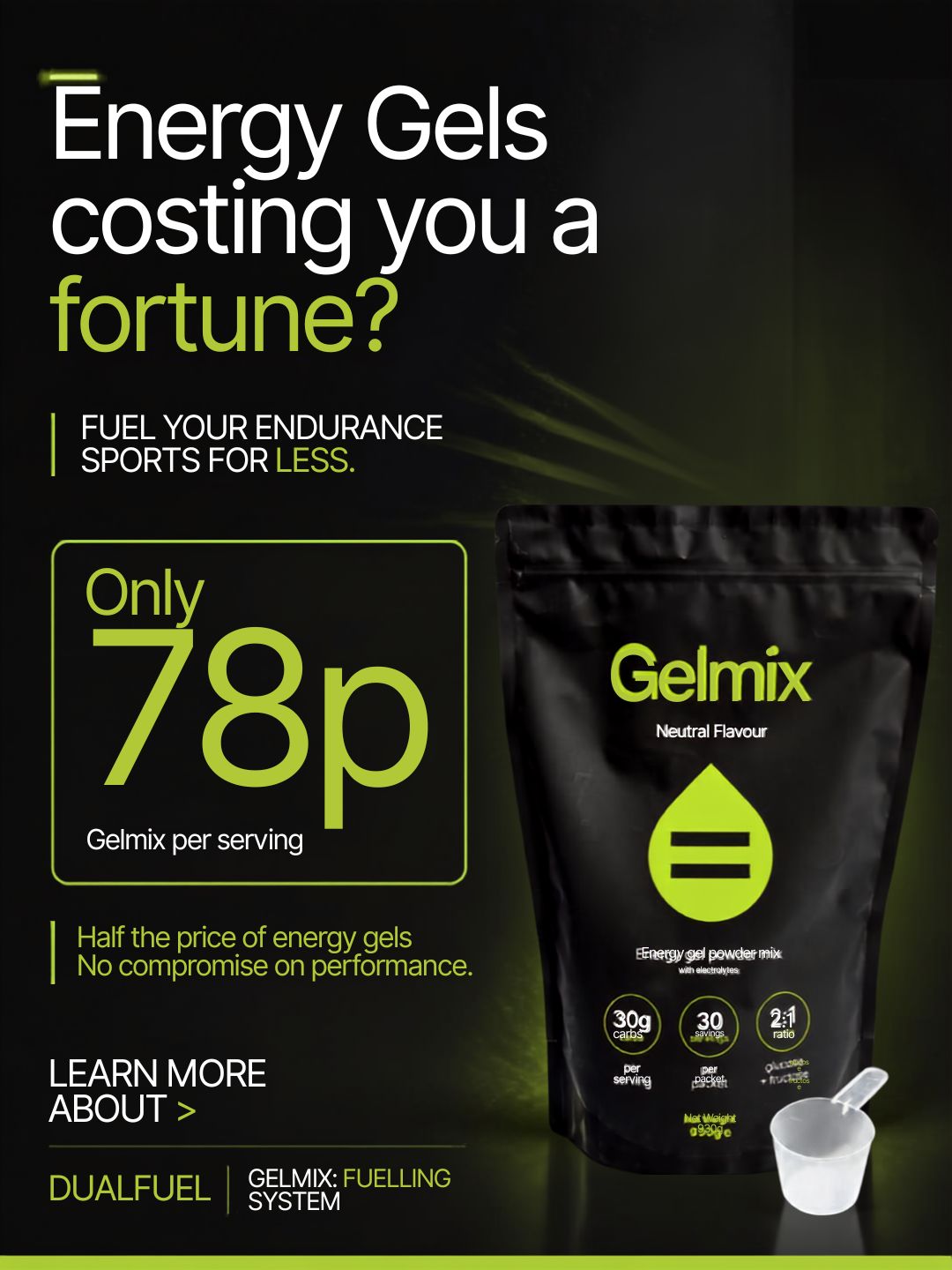
Energy gels are easy to carry and quick to digest, and you can take one with a single hand. You can mix your own gels with Dualfuel Gelmix in your chosen flavour to cut costs over a season.
Real food, bananas, rice cakes, jam sandwiches, suits some riders on long days. It is bulkier and harder to eat at speed, so practise it before race day.
Sports drinks deliver carbohydrate and fluid in one step, but watch concentration: too strong and they can upset your stomach.
Many riders take gel with water, while others take it dry. If you want to know which works best for you, read how to take energy gels with or without water before you choose.
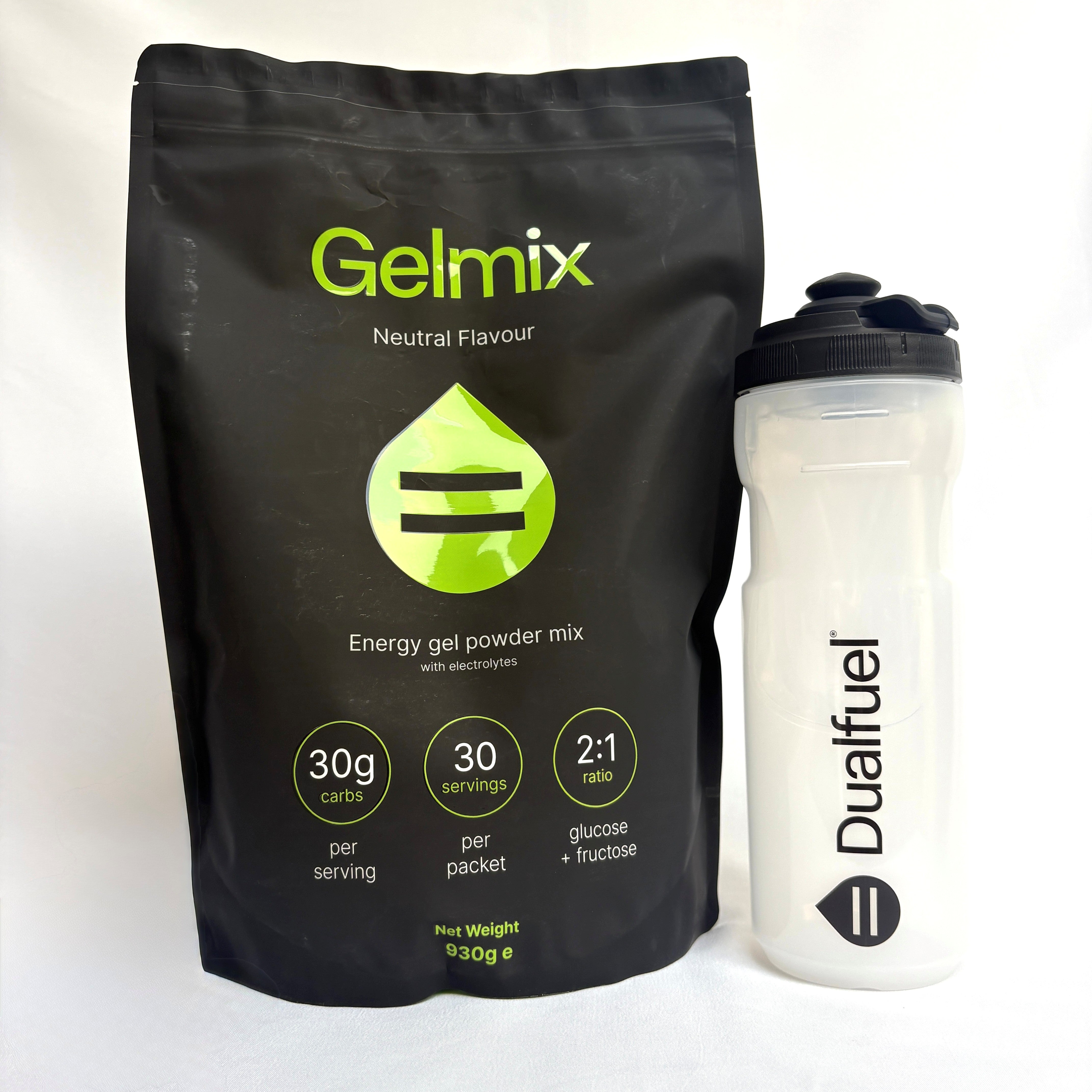
If you want to avoid stopping to swap food, a bottle that carries both fluid and gel can help. The Dualfuel Bottle and Gelmix bundle is built for this, letting you fuel from one bottle without taking your hands off the bars.
Here is a quick guide to the main options:
| Option | Best For | Main Drawback |
|---|---|---|
| Energy gels | Quick, easy carbohydrate | Wrapper waste and cost |
| Refillable gel mix | Lower cost and less waste | Needs mixing before the race |
| Real food | Long days and gentler digestion | Bulky and harder to eat at speed |
| Sports drinks | Fluid and carbohydrate together | Concentration can upset the stomach |
British Cycling guidance on race nutrition
Building a Cycling Hydration Strategy Around Sweat Rate
Your sweat rate is how much fluid you lose during exercise, and it varies from rider to rider.
Estimate it by weighing yourself before and after an hour-long training ride, noting how much fluid you drank.
- Drink to thirst rather than forcing large volumes
- Add electrolytes if you sweat heavily or race in heat
- Avoid drinking so much that you feel bloated
Some riders carry more fluid than they need; others run short on long, hot climbs. Testing your plan in training helps you avoid both.
A Timed Race Fuelling Plan and How to Rehearse It in Training
A timed plan turns your targets into clear actions. Write it before race day, then practise it on long training rides. The example below is for a four-hour race at about 60 grams of carbohydrate per hour, roughly 240 grams across the race.
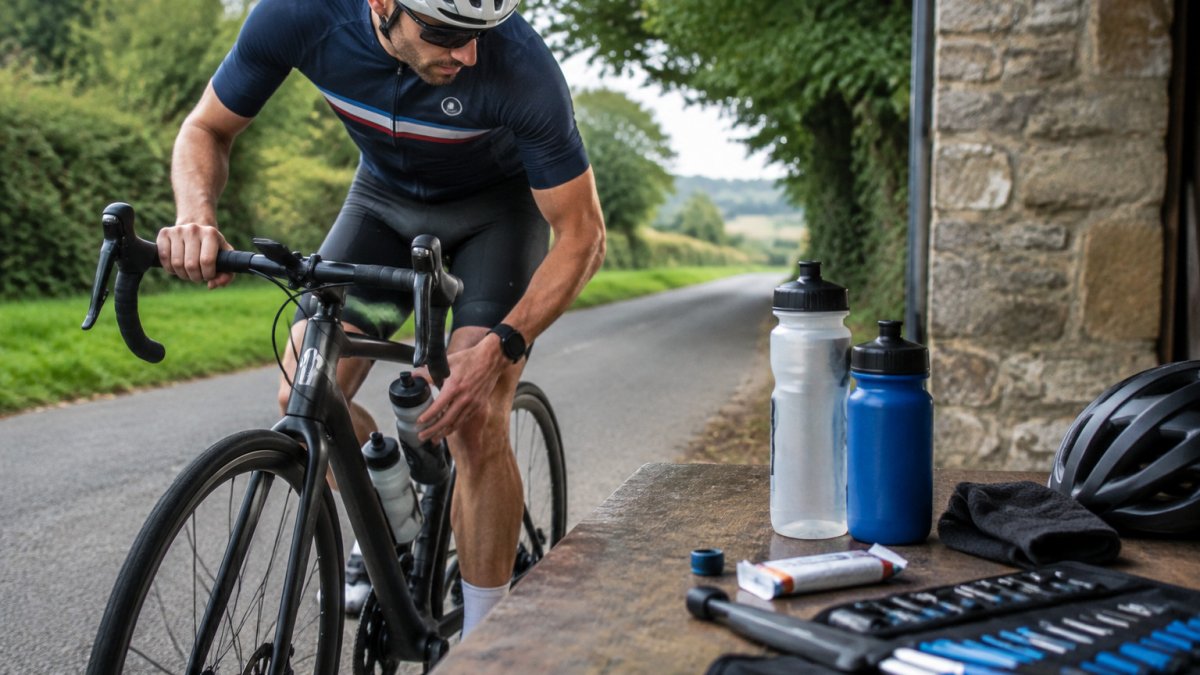
A time-stamped example plan
- 0:30 - Take your first gel (about 20 to 25 grams of carbohydrate) with water
- 1:00 - Drink from your bottle and take a small amount of real food (about 20 grams of carbohydrate)
- 1:30 - Take your next gel and check your fluid level
Adjust the plan to suit you. If your stomach feels unsettled, reduce the amount per dose and spread it out. If you feel flat, take carbohydrate a little earlier next time.
Carrying and accessing fuel during a race
How you carry food matters as much as what you carry. Gels in a jersey pocket are hard to reach in a bunch, so many riders tape a gel to the top tube or use a small handlebar bag. Keeping that setup consistent makes it easier to match each feed to the effort, a principle also reflected in Roxberry Juice Co.'s discussion of nutrient timing.
- Keep the fuel you need in the first hour within easy reach
- Put longer-term supplies in a second pocket or bottle so you are not searching mid-race
- Practise opening wrappers and eating with one hand in training
Using feed zones and refilling bottles
If your race has feed zones, plan what you will take at each one rather than deciding on the day. A common pattern is a fresh bottle at the first feed and a gel or solid food at the second, so you are not carrying everything from the start.
- Know which side of the road the feed zone is on and position yourself early
- Practise grabbing a bottle at speed in training
- Have a backup plan if you miss a feed, such as carrying an extra gel
Troubleshooting stomach problems during a race
Nausea, bloating and difficulty eating are common barriers in longer races. If your stomach turns, reduce the concentration of what you are taking in: sip plain water, switch to smaller, more frequent doses, and avoid mixing too many products at once.
- If you feel bloated, back off solid food and take small sips of fluid
- If you feel nauseous, try a plain carbohydrate drink rather than a gel
- If you cannot eat, prioritise fluid and electrolytes and resume carbohydrate when your stomach settles
Watch out: forcing large doses of carbohydrate when your stomach is already unsettled often makes it worse, so reduce the dose rather than pushing through.
Contingency plans for missed feeds and changing conditions
Races rarely go to plan. Carry a small buffer of carbohydrate, such as an extra gel, in case a feed zone is missed or a bottle is dropped.
If the start is delayed, eat a small amount of carbohydrate before the neutral roll-out so you do not begin under-fuelled. If the pace is higher than expected, take carbohydrate earlier and in smaller doses rather than waiting for your planned time.
Rehearsing the plan in training
Rehearsal matters most. Practise your timed plan on training rides of similar length to your race. A bottle and gel mix setup lets you rehearse the exact setup you plan to race with, so there are no surprises on the day.
Keep a simple log of what you ate, when, and how you felt. Over a few rides, patterns will show you what works. Test one change at a time so you can tell what made the difference.
British Cycling guidance on race nutrition
Frequently Asked Questions
How many carbohydrates should I consume per hour during a cycling race?
Most riders aim for roughly 60 to 90 grams of carbohydrate per hour during longer efforts, with the higher end reserved for well-trained athletes who have practised fuelling at that rate. Shorter races under 90 minutes often need little or no mid-race carbohydrate. Build up gradually in training, because gut tolerance is trainable and a target you cannot digest does more harm than good. Track what you consume each hour so you can adjust the plan for the next event.
When should I start fuelling during a cycling race?
Start fuelling early, usually within the first 30 to 45 minutes, rather than waiting until you feel fatigued. Once energy stores run low, it is much harder to recover, so steady small intakes from the start protect your pace later on. Begin with a modest amount and increase it over the first hour as your stomach settles. Note the timing of your first feed in your race plan so it becomes automatic on the day.
What should I eat and drink during a long cycling race?
A combination of a glucose and fructose carbohydrate source works well for long efforts, since using two transport pathways in the gut allows more carbohydrate to be absorbed each hour. Liquid energy gel mixed with water, sports drinks and easily digestible real food such as bananas or rice cakes all have a place, depending on what your stomach tolerates. Include some sodium with fluids, especially in hot conditions. Test every product in training before race day.
Should I use energy gels or sports drinks during a cycling race?
Many riders use a mix: sports drinks provide fluid and carbohydrate together, while gels deliver a concentrated dose in a small package that is easy to carry. Dualfuel's GelMix, a 2:1 glucose-to-fructose powder with electrolytes, can be mixed into a liquid gel at around 78p per serving, compared with £2 or more for many single-use gels. Using the Dualfuel Sports Bottle lets you switch between water and gel without removing a hand from the bars, which matters at race pace.
